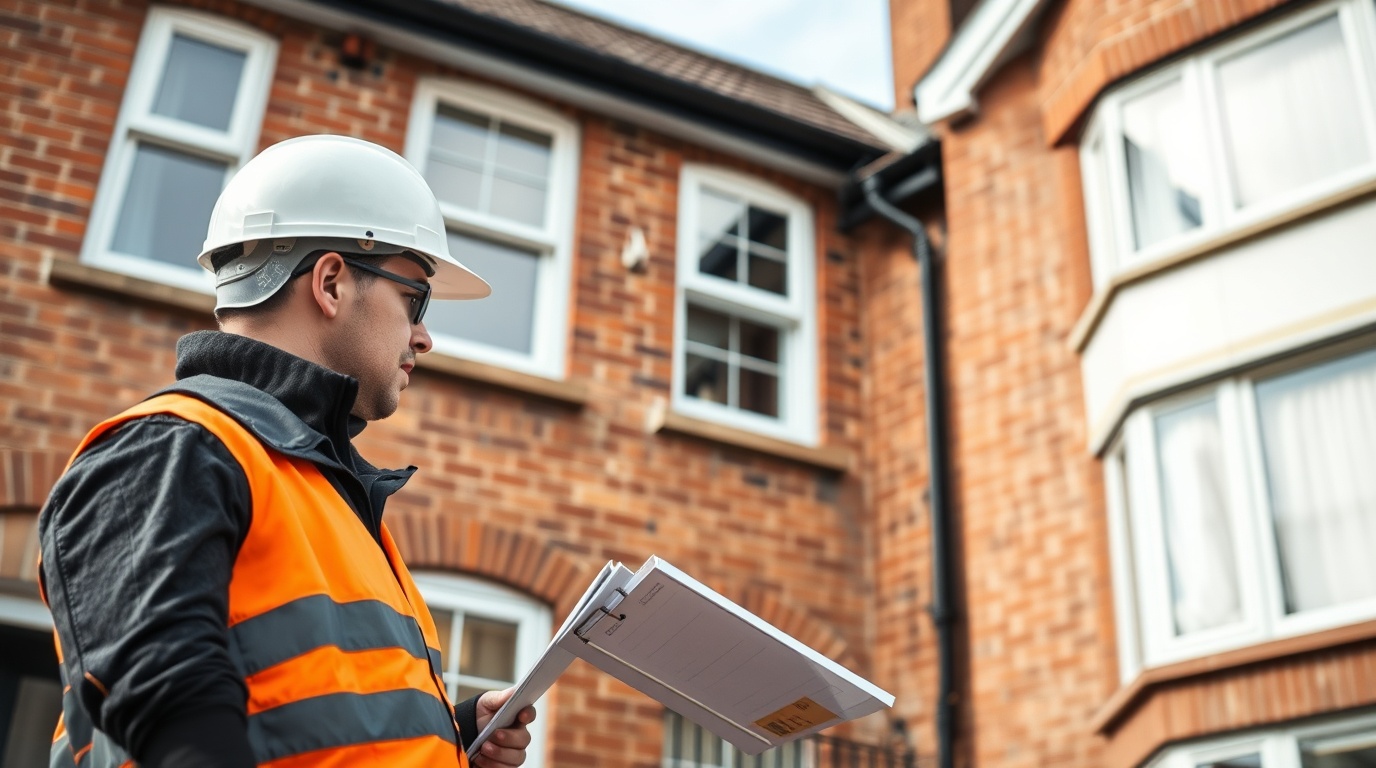
The short answer
A RICS Level 3 Building Survey is a detailed, visual inspection of the whole property and a comprehensive written report. It covers the structure (foundations evidence, walls, movement, cracking), the roof (coverings, structure, chimneys, flashings), external walls and finishes, windows and doors, internal floors, ceilings and walls, damp and timber (rising and penetrating damp, rot, woodworm), and the services (electrics, plumbing, heating, drainage) on a visual basis only. Each element is given a traffic-light condition rating (1, 2, 3), and for serious issues the report explains the likely cause, the consequences of inaction and the repair options. It is non-disruptive — nothing is opened up or tested destructively — so it does not include a market valuation, specialist tests, or guarantees that hidden defects are absent. Where a problem needs a specialist, the report recommends further investigation.
The Level 3 Building Survey is the most thorough mainstream RICS survey. Knowing exactly what it covers — and what it does not — helps you read the report and judge whether you need specialist follow-ups.
Level 3 scope
- StructureWalls, movement, cracking
- RoofCoverings, structure, chimneys
- Damp & timberDamp, rot, woodworm
- ServicesVisual check only
- RatingsTraffic-light 1/2/3 with advice
What the survey inspects
The Level 3 Building Survey examines all the readily accessible parts of the property, inside and out, and reports on their construction and condition. The surveyor works through the building methodically and gives each element a condition rating, with detailed commentary on anything significant.
| Area | What is covered | Examples of issues found |
|---|---|---|
| Structure | Walls, movement, load paths | Cracking, subsidence signs, bowing |
| Roof | Coverings, structure, chimneys | Slipped tiles, spread, decayed timbers |
| External | Walls, render, rainwater goods | Spalling, failed pointing, blocked gutters |
| Windows & doors | Condition, operation, seals | Rot, failed double glazing, draughts |
| Internal | Floors, ceilings, walls | Sloping floors, cracked plaster |
| Damp & timber | Moisture, rot, infestation | Rising/penetrating damp, woodworm |
| Services | Electrics, heating, drainage | Visual only; advises further tests |
The main elements a RICS Level 3 Building Survey assesses on a visual basis.
How findings are reported
The strength of a Level 3 report is not just the inspection but the explanation. Each element receives a traffic-light condition rating:
- Condition rating 1 (green): no repair currently needed.
- Condition rating 2 (amber): defects needing attention, not serious or urgent.
- Condition rating 3 (red): serious or urgent defects, or items needing further investigation.
For the more significant defects, the surveyor goes beyond the rating to set out the likely cause, what will happen if it is left, and the broad repair options. So rather than simply noting 'damp to rear wall', a Level 3 report explains whether the damp appears to be rising, penetrating or condensation, what is probably driving it, and what putting it right involves. The report also flags matters to raise with your conveyancer and recommends any specialist investigations.
What it does not include
For all its depth, the Level 3 survey has clear limits, and understanding them prevents false expectations. It is a visual, non-disruptive inspection — the surveyor does not lift fitted carpets, open up the structure, move heavy furniture, or carry out destructive testing. Services such as electrics, heating and drainage are commented on but not tested; the report will recommend a specialist check where one is warranted.
Frequently asked questions
Does a Level 3 survey test the electrics and plumbing?
No. The surveyor visually inspects services such as electrics, heating, plumbing and drainage and comments on their apparent condition, but does not test them. Where there is concern, the report recommends a specialist test, such as an Electrical Installation Condition Report (EICR).
Will a Level 3 survey find every defect?
No survey can. It is a thorough visual inspection of accessible areas, so it cannot guarantee that hidden defects — behind finishes, under floors or within the structure — are absent. Where signs suggest a hidden problem, it recommends further, sometimes invasive, investigation.
Does a Level 3 survey include a valuation?
Usually no. The Building Survey focuses on condition rather than market value. Some firms offer a valuation as a paid add-on, and the lender's mortgage valuation is a separate report carried out for the lender.
Sources & further reading
- RICS — home surveys explained
- HomeOwners Alliance — types of house survey
- Which? — house surveys explained
Figures on this page are typical UK ranges drawn from published sources and depend on the specific property and survey level. They are guidance, not a quotation.