The short answer
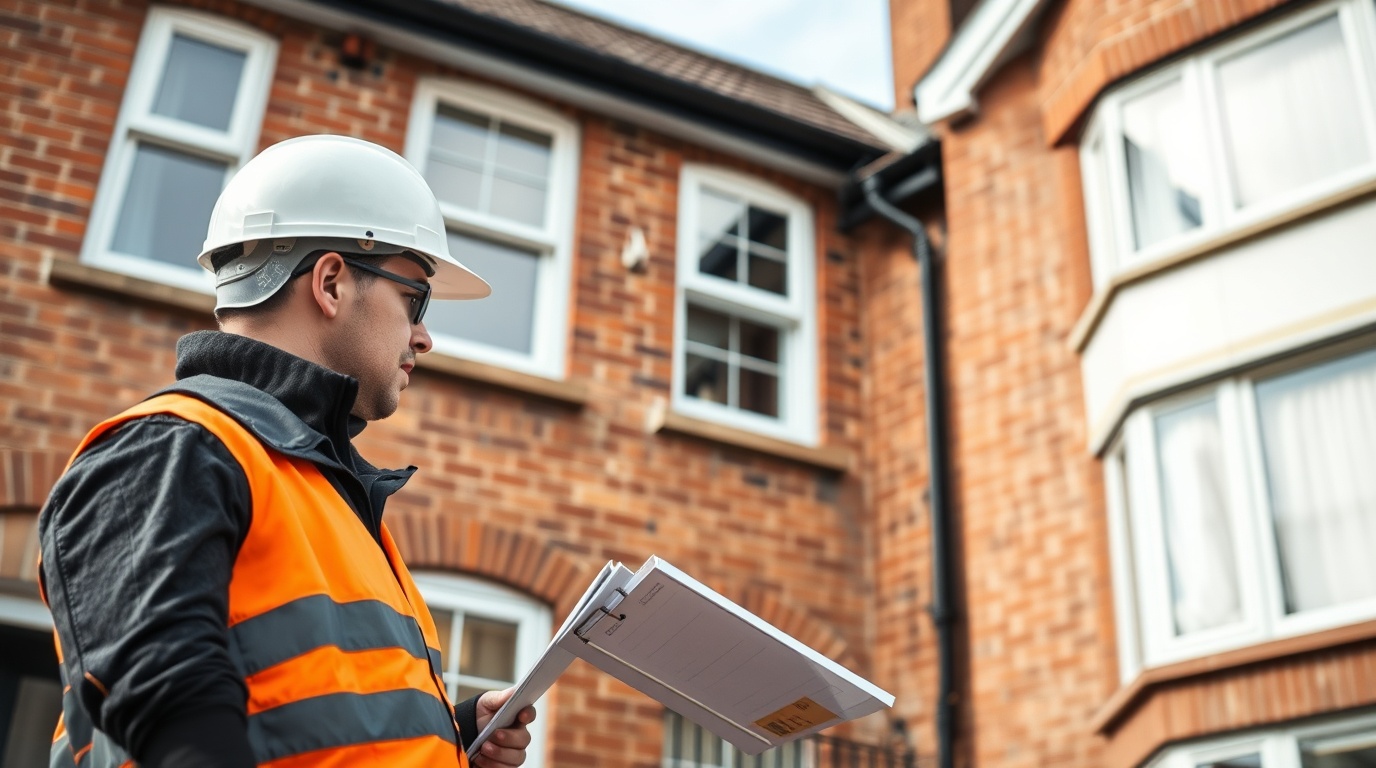
Yes — the roof is a core part of a building survey, inspected from two sides: outside from ground level (often with binoculars, and sometimes a ladder, pole camera or drone where the surveyor offers it) and inside via the loft / roof void where it is safely accessible. Externally the surveyor assesses coverings, ridge and hip lines, valleys, flashings, chimney stacks and rainwater goods; internally they examine the roof timbers, sarking, insulation, ventilation and any leak, rot or beetle evidence. The limit is that a surveyor does not walk on the roof or strip coverings, so high or steep areas, the backs of slopes and anything under felt or behind a finished ceiling can only be assessed indirectly. Defects that can't be seen are noted as limitations, with a roofer's inspection recommended where needed.
The roof is one of the most expensive elements to repair, so it gets close attention. Here is how a building survey examines it and where the view runs out.
Roof inspection at a glance
- External viewGround level / binoculars
- Internal viewLoft / roof void if accessible
- Sometimes usedLadder, pole camera, drone
- Not doneWalking on roof, stripping tiles
- Next stepRoofer if defects suspected
The external roof inspection
From the ground, the surveyor scans the roof slopes for slipped, cracked, delaminating or missing slates and tiles, checks the ridge and hip tiles and their bedding, looks at valleys and abutment flashings, and assesses the chimney stacks (pointing, leadwork and pots) and the verges and eaves. They also follow the rainwater goods — gutters, downpipes and hoppers — for blockages, leaks or staining that hint at overflow. Binoculars extend the view, and some surveyors carry a pole camera or offer a drone for otherwise unreachable slopes, though this is not standard on every survey. Flat roofs are checked for ponding, splitting and failed seams where they can be viewed from a window or accessible point.
The roof from inside the loft
Where the loft hatch is accessible and entry is safe, the surveyor goes into the roof void. This is often more revealing than the outside, because it shows the underside of the covering, the rafters, purlins and ceiling joists, the sarking felt, the insulation depth and the ventilation. They look for daylight or water staining (active leaks), sagging or undersized timbers, woodworm flight holes, wet or dry rot, and signs of past or amateur structural alteration. Inadequate insulation or blocked ventilation — which can cause condensation in the roof space — is also noted. If the loft is boarded over, insulated to the rafters, or unsafe to enter, the surveyor records that the timbers could not be inspected.
| Where | What is checked | Common defects |
|---|---|---|
| Slopes | Slates/tiles, ridge, flashings | Slipped/missing units, worn flashings |
| Chimneys | Pointing, leadwork, pots | Loose pointing, cracked flaunching |
| Loft timbers | Rafters, purlins, joists | Sagging, woodworm, rot, overload |
| Felt/insulation | Sarking, insulation, ventilation | Torn felt, thin insulation, condensation |
Indicative checklist; access governs what is visible. Source: RICS Home Survey Standard.
What stays hidden, and when to call a roofer
Because a surveyor does not climb onto or strip the roof, certain things stay out of view: the condition of the back slope if it can't be seen, the state of fixings and battens beneath the tiles, the membrane on a felted roof, and concealed leaks that have not yet reached a ceiling. A steep, tall or terraced roof limits the ground-level view further. Where the survey finds active leaks, widespread covering failure, sagging timbers or suspect chimney leadwork, it will recommend a specialist roofer's inspection and quote before exchange, so you know the true scale and cost rather than relying on a view from below.
Frequently asked questions
Does the surveyor go on the roof?
No. Surveyors inspect from ground level, usually with binoculars, and from inside the loft. They do not walk on the roof or remove coverings, so high or hidden areas are assessed indirectly and noted as limitations.
Will a drone be used to inspect the roof?
Sometimes. A few surveyors offer drone or pole-camera footage for otherwise unreachable slopes, but it is not standard on every building survey. Ask in advance if roof access is a particular concern on the property.
What if the loft cannot be accessed?
If the hatch is sealed, the void is boarded, or entry is unsafe, the surveyor records that the roof timbers could not be inspected. That limitation is stated in the report, and a follow-up inspection may be advised.
Sources & further reading
Figures on this page are typical UK ranges drawn from published sources and depend on the specific property and survey level. They are guidance, not a quotation.